Introduction to Lightning Path Psychological Theory
The Lightning Path proposes a dual-consciousness model of human psychology grounded in the premise that the human psyche comprises two distinct but interactive entities: the Bodily Ego—a temporally bounded, biologically instantiated consciousness governed by the evolutionary neurology of the Physical Unit—and the Spiritual Ego, a transcendent consciousness neither limited nor substantially constrained by material reality.
The theory’s central goal is the cultivation of a healthy physical body and mind capable of sustaining a strong, aligned, and persistent Connection between these two egos, a state theorized to underlie optimal human functioning, creativity, and what Abraham Maslow termed Eupsychia—the “good society” organized to satisfy human needs and actualize collective potential.
Theoretical Architecture
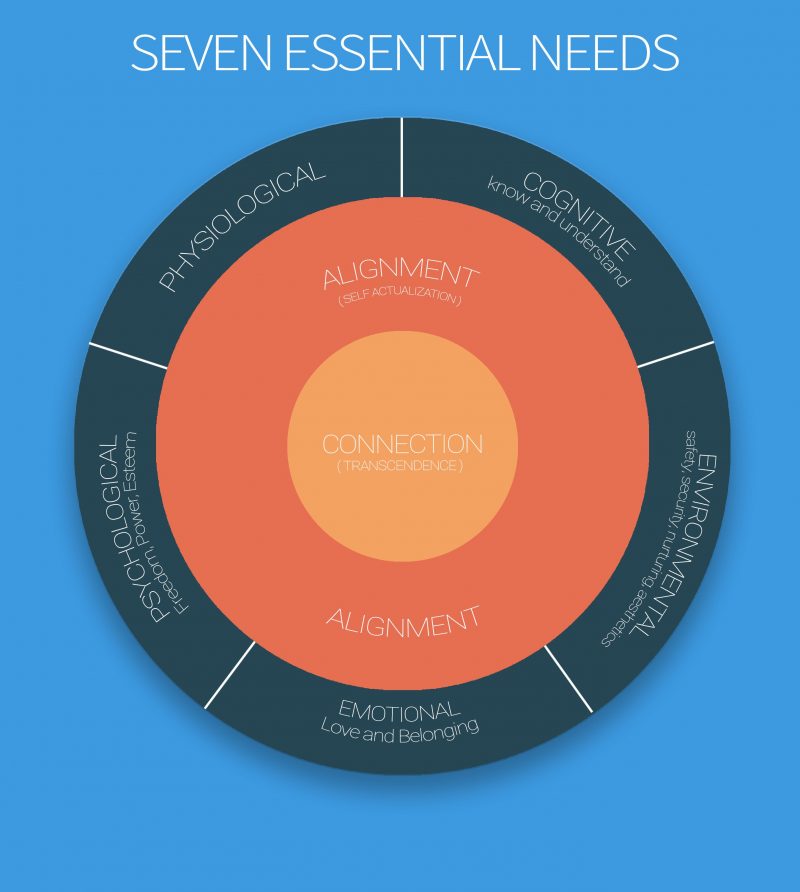
The theory posits a Horticultural Model of human development that proceeds via the satisfaction of Seven Essential Needs, organized not hierarchically but as an interdependent circle where growth is continual and each need must be sufficiently met throughout the lifespan.
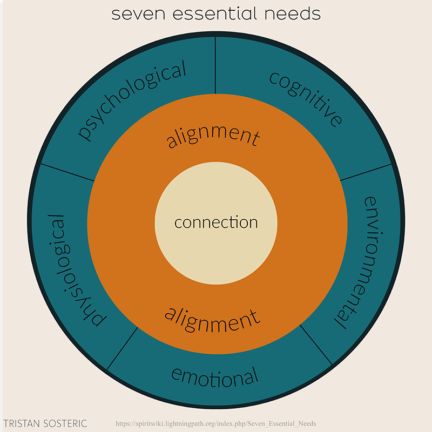
When all needs are met, the Bodily Ego enters Growth Mode, directing energy toward growth, development, and creative, humanitarian, and spiritual pursuits; when needs are unmet, it enters Deficit Mode, redirecting energy toward need-compensation, or Defense Mode, mobilizing against actual or perceived psychological, emotional, physical, or spiritual assault.
The theory contends that most identified psychopathologies are rooted in chronic operation in Deficit or Defence Mode, and that individuals in these states are structurally vulnerable to manipulation by any entity promising need-satisfaction or protection.
Convergences with Ancient and Modern Frameworks
The Lightning Path shares substantive affinities with both ancient religious and modern psychological systems. Like Vedantic and contemplative traditions, it posits a dualistic consciousness structure—an everyday ego and a higher Self—and frames the human project as alignment between them.
Like Freudian psychoanalysis, it acknowledges the role of early environmental experience in shaping pathology and recognizes unconscious processes; like behaviourism, it accepts that the bodily ego is programmed and damaged by environmental experience.
Its deepest lineage, however, lies with humanistic psychology: it explicitly recovers Maslow’s Eupsychian project of a needs-based psychology oriented toward the “good person” and “good society,” while rejecting the hierarchical pyramid in favour of a circular model that treats all needs as simultaneously essential.
Points of Departure
Where the theory diverges sharply is in its metaphysical commitments and political framing. Unlike Freud’s tripartite id-ego-superego model, which remains entirely within a materialist frame, the Lightning Path posits a Spiritual Ego that transcends material causation—an ontological move closer to transpersonal psychology than to classical psychoanalysis. Unlike behaviourism, which reduces consciousness to observable behaviour, it insists on the reality and developmental necessity of non-material consciousness. Unlike Maslow’s hierarchy, which implies sequential need-satisfaction, the Lightning Path’s circular model argues that alignment and connection are not “higher” luxuries accessible only after basic needs are secured, but developmental necessities for all—a framing with explicit political implications.
Finally, unlike traditional religious frameworks that ground their soteriology (salvation, health, healing) in faith or revelation, the Lightning Path presents itself as an empirically grounded, scientifically informed Human Development Framework—a “knowledge technology” designed to replace outdated religious, capitalist, and authoritarian systems with structures that actively foster healing, connection, and the full realization of human potential.
A detailed list of theoretical propositions is provided below.
Propositions
- Human beings have a dual consciousness which consists of a Bodily Ego governed and limited by the evolutionary neurology and biology of the Physical Unit and a powerful Spiritual Ego which is neither limited nor significantly impacted by material reality. Understanding human health, development, and potential—creating Eupsychia—requires an in-depth understanding of the spiritual ego, the bodily ego, and how they interact.
- The primary goal of Human Development is to develop a healthy Physical Unit capable of achieving a strong and persistent Connection between the Spiritual Ego and Bodily Ego.
- In order to develop a healthy Physical Unit with a strong and independent Bodily Ego, all Seven Essential Needs of the individual must be sufficiently met throughout an individual’s lifespan.
- When all of the seven essential needs are sufficiently met, the individual Bodily Ego enters Growth Mode. When in growth mode, the individual devotes time and energy towards creative, humanitarian, and spiritual pursuits.
- When any of the seven essential needs go unmet, the bodily ego incurs significant biological damage. For example, failing to meet a child’s need for nutritious food damages the neurology and physiology of the body, stunting growth and undermining development.
- When any of the seven essential needs are not met, the bodily ego, in an effort to meet them, enters Deficit Mode. While in Deficit Mode, the bodily ego directs energy towards meeting unmet needs.
- When the specific environmental need for a safe home and environment is thwarted, the bodily ego enters Defense Mode. While in defense mode, the bodily ego directs energy towards defending the body from psychological, emotional, physical, or spiritual assault.
- When bodily energy is directed towards overcoming deficits or defending assault, growth is attenuated or deactivated, and physiological, emotional, and psychological development suffers.
- Most currently identified psychopathologies are rooted in a neglected and/or traumatized bodily ego operating chronically in deficit mode, defense mode, or both.
- Being as that the primary motivation of an individual in deficit mode is to meet unmet needs, and being that the primary motivation of an individual in defense mode is to protect itself from assault, a physical unit operating in deficit or defense mode is easy to manipulate and control. Any individual or organization that promises the satisfaction of an essential need or protection from assault may gain control over an individual. By contrast, individuals whose essential needs are sufficiently satisfied and who are not constantly directing energy towards protection are independent, creative, and very difficult to manipulate.
- The goal of psychology is to provide the theoretical foundations for Human Development]/sw] and, because of the damaged incurred as a consequence of [sw]Toxic Socialization, healing. The goal is to encourage the bodily ego to exit deficit and defense mode and direct energy towards healing and growth.
*See Psychological Theory – The SpiritWiki for the most up to date version
Psychological Theory

Lightning Path Psychological Theory